Past Events
-
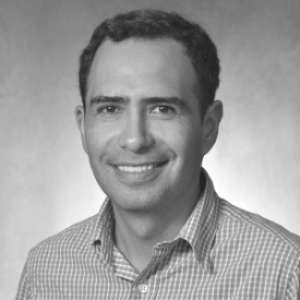 Apr 18PHS Monday Seminar: Marcelo Perraillon, PhD: “Using All-Payers Claims Databases for Cancer Research: Experience from Colorado”
Marcelo Perraillon, PhD, Associate Professor Department of Health, Systems, Management & Policy University of Colorado Anschutz Medical Campus Research on the cancer care continuum has benefited from linkages between state central cancer registries and medical claims databases. Claims include patient-level longitudinal information on cancer screening, treatment, and payments, but claims alone are limited since precise …
-
Apr 11PHS Monday Seminar: Jennifer Weiss, MD, MS and Matthew Gigot, MPH: “Measuring and Addressing Health Disparities Through a Statewide Quality Improvement Collaborative”
Learning Objectives: Understand the role that regional quality improvement collaboratives play in addressing health disparities Become familiar with novel ways to measure and identify health disparities utilizing electronic health record data Recognize the importance of researchers partnering with statewide collaboratives to help study, design, and implement quality improvement interventions
-
Apr 4
-
Mar 30Lunch and Learn: Population Health’s Next Big Question: Where Would You Put The Money?
Register here for a Lunch & Learn with David Kindig and John Mullahy! The field of population health management starts with the idea that there is an optimal balance of investments in the multiple determinants of health (e.g., behavior, environment, socioeconomic status, medical care) to maximize overall health outcomes at the population level. In their …
-
 Mar 28
-
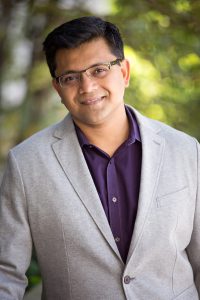
Mar 21PHS Monday Seminar: Dalvery Blackwell, BA, IBCLC and Erica Morrell, PhD: “Geographies of Racism and Sexism: Understanding Spatialized Intersectionality, Maternal / Child Health, and Milwaukee’s Lead Crisis”
In this talk, Dalvery Blackwell and Erica Morrell will discuss what they term, ‘spatialized intersectionality.’ Spatialized intersectionality encompasses the widespread ways that societal privilege and oppression have become geographically embedded, and the implications on peoples’ health outcomes today. Dalvery and Erica will draw from relevant scholarship and experience, and apply it to their research into …
-
Mar 14
-
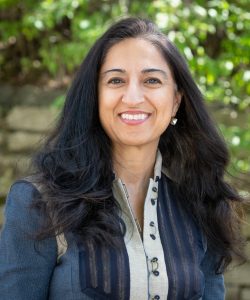 Mar 7PHS Monday Seminar: 2022 Philip M. Farrell Population Health Distinguished Alumni Lecture, Nasia Safdar, MD, PhD: “Preventing Healthcare-associated Infections: Neither simple nor easy”
What you will learn: Healthcare-associated infections, a byproduct of healthcare, are considered largely preventable. However, reducing the burden of healthcare-associated infections in the complex environment of health systems is challenging and requires a systems approach with multidisciplinary expertise. This talk will discuss the advances that have occurred in the prevention of healthcare-associated infections, the fragility …
-
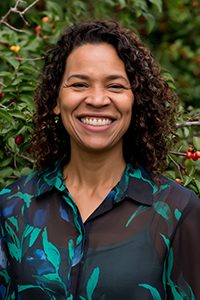 Feb 28PHS Monday Seminar: Marah Curtis, “Ambient Air Pollution, Housing Context, and Birth Outcomes among Wisconsin Mothers”
Ambient Air Pollution, Housing Context, and Birth Outcomes among Wisconsin Mothers. Abstract: To assess the association between air pollution exposure and housing context during pregnancy and adverse birth outcomes. Methods. We linked air pollution data from the Environmental Protection Agency and housing data from the American Community Survey with birth records from Wisconsin counties over …
-
 Feb 21PHS Monday Seminar Andrew Gelman, “Some Bayesian Methods for Causal Inference”
Bayesian inference can make a difference in causal inference. These areas include learning from noisy experiments, generalization to new scenarios, meta-analysis, decision analysis, and models for measurement error. We discuss applications in biology, psychology, marketing, and other areas. These ideas should be relevant if you are interested in using Bayesian methods and also if you …